The Guild of Pastoral Psychology
The Power of the Bond: Shakespeare and the Archetype of Promise
Notice: Bookings will open on the 1st December 2026
How does psyche experience the making of a promise? Beyond the legal and social expectations that attend when we enter into an agreement, does something happen? Or is it merely ritual and “words, words, words”? Human beings have long held a belief in the power of one’s “word”, and in the endurance of bonds, of all types—treaties, trade agreements, defensive pacts, contracts, oaths, vows. It remains to be seen whether the 21st century will tolerate the continuance of this belief; it may be that the idealism of our collective faith in the archetype of the promise and its fulfilment cannot survive the postmodern turn. Can human behaviour, ultimately, be governed by words and ideas, or is this very notion the product of an inflation of the rational functions?
“As Above, So Below”—the idea that what happens on earth reflects what happens in the metaphysical realm—is expressed nowhere better than in the works of Shakespeare, who provides an indispensable bridge across that great water. His plays are big enough to retain the archetypal quality of myth, and small enough to convince us that we are dealing with real human beings, with real thoughts and emotions, experiencing their real lives. A marriage bond takes place in secret between the children of two enemy houses; a loan is given, a pound of flesh its collateral; two would-be Kings lay claim to the same throne, and the metaphysical order crashes down around them; a royal Prince executes the letter of the law, sentencing rebel leaders to death moments after making peace with them.
Situated somewhere between an academic lecture and performance art, this presentation will be a theatrically stirring exploration of Shakespearean promise and betrayal, through the lens of Jungian psychology. A depth-psychological understanding of this topic has ramifications for our relationship with our own explicit and implicit rules, pertaining not least of all to that omnipresent set of rules which governs our clinical work: the therapeutic “frame”.
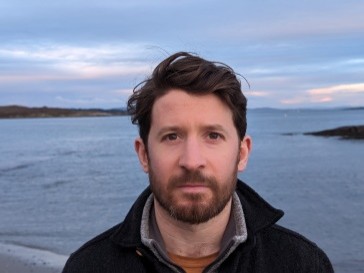
Speaker: Joel Crichton
Joel Crichton, IAAP, MPS, CCC, is a Jungian Analyst, living and practicing in Victoria, Canada, and educated at the C. G. Jung-Institut in Zürich. A classically trained actor, he worked in theatre for over a decade and has a deep appreciation for the creative process and its necessities. He is the author of Jungian Shakespeare: Coming Down to Earth in King John, Twelfth Night, and Cymbeline (Routledge 2025). He also writes a Substack of Jungian film criticism called The Story Always Thinks.